
The Fleet Manager’s Playbook: Turning Australian Business EVs into Grid Assets
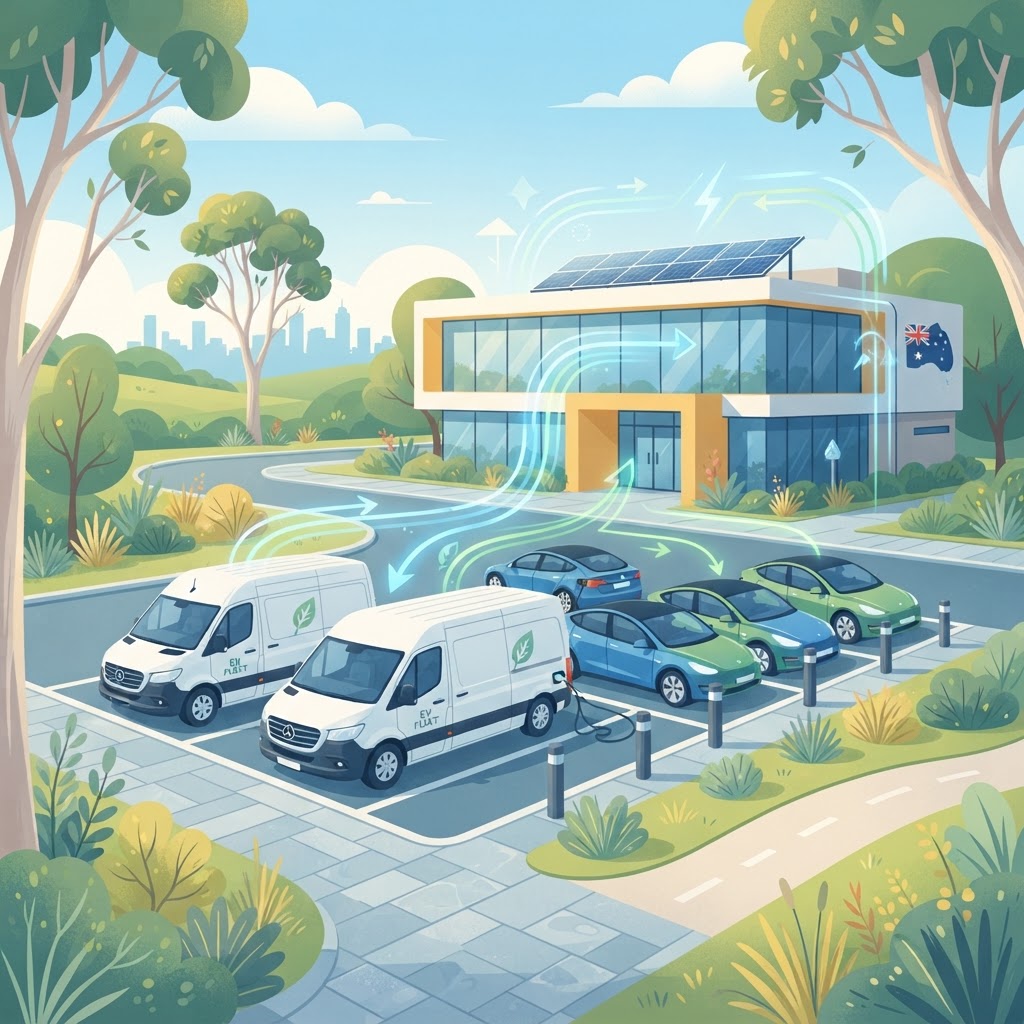
The Shift: From Cost Centre to Powerhouse
For years, fleet management has been a game of fuel logs, tyre wear, and depreciation. But for Australian businesses adopting electric vehicles (EVs), the narrative is shifting. Your fleet is no longer just a collection of transport assets; it is a massive, mobile energy storage system that can help your business navigate the complexities of the National Electricity Market (NEM).
With Australia’s rapid transition to renewable energy, the grid is increasingly volatile. By treating your fleet as a Distributed Energy Resource (DER), you can unlock revenue streams that turn your vehicles from a capital expense into a balance-sheet benefit.
Understanding the V2X Opportunity
Vehicle-to-Everything (V2X) technology—including Vehicle-to-Home (V2H) and Vehicle-to-Grid (V2G)—is becoming the gold standard for forward-thinking fleet managers.
1. Arbitrage and Load Shifting
Many Australian retailers, such as Amber Electric, offer wholesale pricing access. If your fleet is parked at the depot during the midday 'solar soak,' you can charge your vehicles when prices are at their lowest—or even negative. Conversely, during the evening peak, you can discharge that stored energy back into your facility to avoid high peak-tariff costs.
2. Participation in Virtual Power Plants (VPPs)
When you aggregate multiple EVs, you create a powerhouse capable of assisting the grid. By signing up your fleet for a VPP, you allow an aggregator to manage your fleet's charging cycle in exchange for payments. This helps AEMO balance the grid when demand spikes, providing your business with a new, recurring revenue stream.
Practical Steps to Grid-Integration
Integrating your fleet into the grid isn't just about plugging in; it requires a strategic approach to infrastructure and software.
- Smart Charging Infrastructure: Invest in bi-directional chargers. While standard AC chargers are sufficient for daily use, V2G-enabled chargers are essential for discharging power back to the grid or your building.
- Energy Management Systems (EMS): You need software that talks to your EVs, your chargers, and the grid. Look for platforms that can automate the charging logic based on real-time energy prices and your building’s energy usage profile.
- Fleet Telematics: Knowing the state-of-charge (SoC) for every vehicle is non-negotiable. Your grid participation strategy must always prioritise vehicle availability for operational duties first.
Navigating the Australian Landscape
Australia’s energy market is unique, with state-specific regulations and a diverse retail landscape. Whether you are operating in the NEM or the WEM, the core principle remains: Energy visibility is power.
Before diving in, consult with your utility provider regarding your current commercial tariff. Many businesses are moving to demand-based pricing, which can be punishing if you charge your fleet inefficiently. By aligning your charging habits with your peak building load, you can flatten your energy consumption curve, leading to significant savings on your monthly demand charges.
The Triple Bottom Line
By embracing your role as a 'grid partner,' your business achieves more than just financial efficiency. You are directly contributing to grid stability, enabling higher penetrations of intermittent renewable energy, and demonstrating leadership in corporate sustainability.
As we look toward a future with more corporate EVs on the road, the question won't be 'How much does this fleet cost to run?' but rather, 'How much value is this fleet creating for the business and the grid?' The transition is complex, but the potential is enormous.