
The Solar Arbitrage Play: Mastering Your EV Charging During Daylight Hours
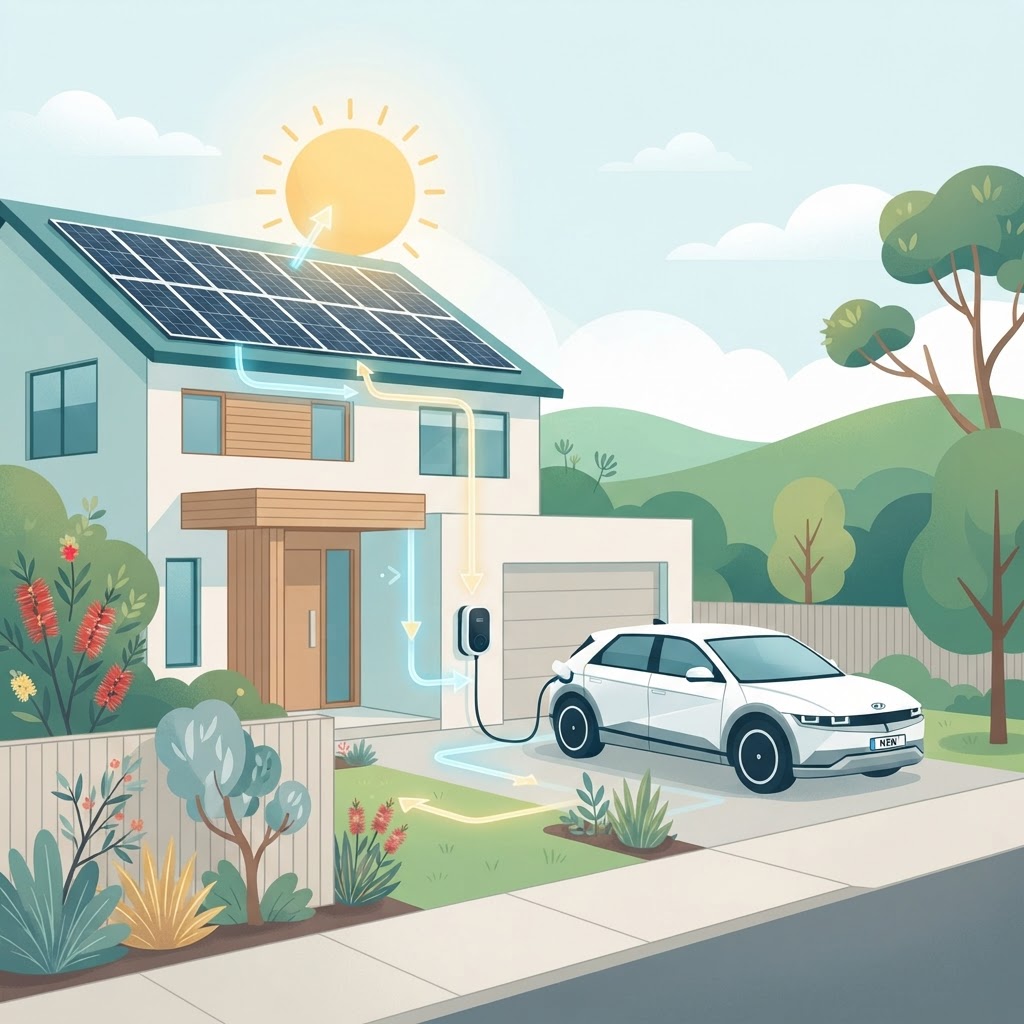
Stop Exporting, Start Driving
For many Australian households with rooftop solar, the focus has historically been on feed-in tariffs (FiTs). While earning a few cents per kilowatt-hour from your retailer is nice, it pales in comparison to the savings generated by using that electricity yourself. When you charge your EV from your own roof, you are effectively paying the cost of your solar installation for your fuel, rather than buying grid electricity at 25c to 40c per kWh.
The Real Value of Your Solar
Think about the typical Australian household solar cycle. Your panels peak between 10 AM and 2 PM, often when you are at work or commuting. If your EV is sitting in the driveway during this time, you have the perfect battery storage solution on wheels. By shifting your charging window to these peak daylight hours, you maximize self-consumption.
Why Time-Shifting Matters:
- Avoid Grid Charges: Every kWh you pull from your own roof is one less you buy from Origin, AGL, or Amber during expensive evening peak periods.
- Reduced Grid Load: By charging when local demand is low and solar supply is high, you are helping alleviate stress on your local distribution network.
- Lower Lifetime Costs: Relying on your own solar generation insulates you from future grid price hikes and volatile wholesale market spikes.
Tools for the Smart Australian Driver
If you have a smart charger—such as a Zappi, Wallbox, or Tesla Wall Connector—you can configure it to 'Solar Only' or 'Eco' modes. These settings ensure your car only draws power when your solar panels are producing surplus energy, preventing you from accidentally drawing from the grid.
If you don't have a smart charger, you are not out of luck. Most modern EVs allow you to set scheduled charging through their companion apps. Even a simple 'plug and play' schedule that forces charging to occur between 11 AM and 3 PM can drastically improve your solar capture rate.
The Role of Smart Retailers
Retailers like Amber Electric have changed the game for EV owners. By providing access to wholesale pricing, you can monitor the 'spot price' in real-time. On days with high solar penetration, the grid price can occasionally drop to zero—or even become negative. In these moments, you are essentially getting paid to charge your car, provided you have a compatible system to take advantage of it.
Practical Steps to Start Today
- Audit Your Usage: Spend a week checking your solar inverter app. Note when your surplus peaks.
- Check Your Charger: See if your home charger has 'Solar Management' features enabled. If not, check if your EV app allows scheduling.
- Coordinate the Chores: If you work from home, try to time your laundry or dishwasher cycles around your EV charging window to ensure the solar is prioritized for the car.
- Monitor Your Bill: Keep an eye on your next monthly statement. You should see a marked decrease in grid consumption and a slight dip in export credits, which is exactly the outcome we are aiming for.
Ultimately, your EV is the most flexible appliance in your home. By treating it as a dynamic energy asset rather than just a vehicle, you can significantly reduce your cost of transport while supporting Australia’s transition to a decentralized, renewable-friendly grid.